


Everyone lumps the two metals together. That’s the mistake. They’re moving for almost opposite reasons — and understanding why changes how each belongs in your portfolio.
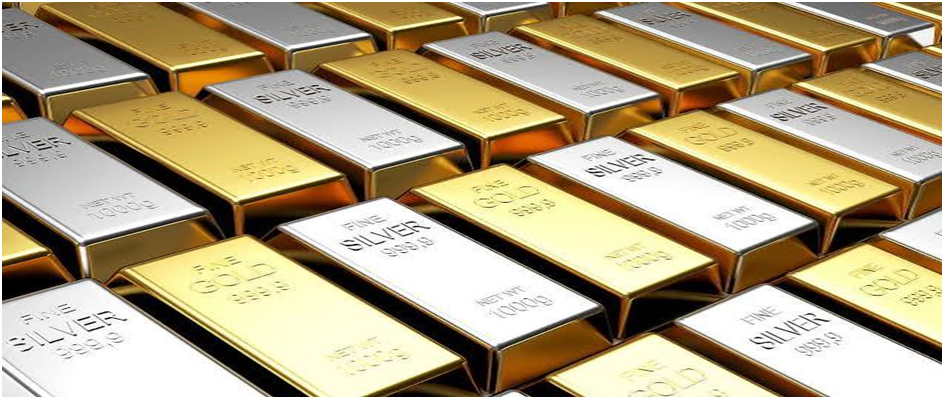
Gold is trading near an all-time high. Silver keeps setting records of its own. So they must be the same trade — buy the shiny metal, ride the fear.
That’s the mistake.
Gold and silver are climbing for almost opposite reasons. One is being bought by the most conservative institutions on earth. The other is being pulled out of the ground by solar factories. Understand the difference, and you understand why they belong in a portfolio very differently — or why one of them might not belong in yours at all.
Why gold is climbing: the world’s central banks are quietly rebuilding around it
The loudest driver of gold isn’t retail investors or jewellers. It’s governments.
Central banks bought a net 244 tonnes of gold in the first quarter of 2026 alone — more than the previous quarter and above the five-year average (World Gold Council, Gold Demand Trends Q1 2026). This isn’t a blip. Official-sector buying roughly doubled after 2021, and in the World Gold Council’s 2026 survey, a record 45% of central banks said they plan to add more gold over the next year, while 89% expect global reserves to keep rising (WGC Central Bank Gold Reserves Survey, June 2026).
The most telling data point: gold has now overtaken US Treasuries to become the world’s largest reserve asset — the first time since 1996 (European Central Bank, June 2026).
Why does this matter to you? Because central banks don’t trade. They allocate. They’re buying gold near record prices not to make a quick return, but as insurance against a fragmenting world — geopolitical risk, currency debasement, and a slow drift away from dollar dependence. When the most price-insensitive buyers on the planet keep buying, it puts a structural floor under the metal that a jewellery-demand story never could.
On top of that sits the noise everyone sees: safe-haven buying around the Iran–US–Israel conflict and the Strait of Hormuz, a weaker rupee (which lifts the price of gold in rupee terms even when global prices are flat), and shifting expectations around US interest rates. In India, gold recently traded around ₹1,43,280 per 10 grams for 24-karat, close to record levels, with physical wedding-season demand holding up despite the price (HDFC Sky, July 2026).
Gold’s story, in one line: it’s the insurance the world’s institutions are buying.
Why silver is a different animal entirely
Here’s what most “precious metals” takes miss. Silver isn’t just a cheaper cousin of gold. It leads a double life.
Roughly 60% of silver demand is industrial (The Silver Institute). It goes into solar panels, electric vehicles, electronics, 5G, and increasingly the data centres powering AI. Gold sits in a vault. Silver gets consumed — soldered into products and never seen again.
That industrial half changes everything. Silver has now run a structural supply deficit for six consecutive years — the world uses more than it mines and recycles, drawing down above-ground stockpiles year after year (World Silver Survey 2026, The Silver Institute). And the deficit is widening even as solar manufacturers use less silver per panel: they’ve thrifted their silver use down sharply, yet mine supply is shrinking even faster.
So silver answers to two masters at once. When the world fears crisis, it catches a safe-haven bid like gold. When the world builds — factories humming, solar installing, data centres rising — its industrial demand pulls too. When both pull together, silver can move violently.
That’s the trade-off. Silver’s dual identity is its opportunity and its risk. It tends to swing harder than gold in both directions — a higher-octane metal, more sensitive to economic growth and rate cycles. Records on the way up can become sharp drawdowns on the way down.
The one relationship worth understanding: the gold-silver ratio
Seasoned investors watch a single number — the gold-to-silver ratio, or how many ounces of silver it takes to buy one ounce of gold.
Over long stretches it has averaged somewhere in the 55–80 range, though it swings widely. When silver outruns gold, the ratio compresses; when fear dominates and gold leads, it widens. It isn’t a crystal ball, and it’s certainly not a signal to act on blindly. But it’s a useful lens: it reminds you that these two metals, so often bought together, are constantly repricing against each other because they’re driven by different forces.
The takeaway isn’t “buy the cheaper one.” It’s that treating gold and silver as one decision means you don’t actually understand either.
What this means for you
Strip away the headlines and the practical lessons are calm and boring — which is exactly the point.
Know what each metal is for. Gold is stability. It’s the diversifier that tends to hold its nerve when equities don’t, backed by the steadiest buyers in the world. Silver is a growth-linked, higher-volatility play that happens to also be a store of value. They are not interchangeable, and they don’t deserve equal weight for equal reasons.
Precious metals are a satellite, not the engine. For most long-term investors, gold and silver work as a small, single-digit slice of a portfolio — held for diversification and insurance, not as the thing that builds your wealth. Metals pay no dividend and no interest; their entire return depends on the next person paying more. That’s a fine role for a slice. It’s a dangerous role for a core.
Beware the record-high reflex. The strongest urge to pile into an asset arrives right after it has already run hard. That’s recency bias, and it’s how investors consistently buy high. A record price is information about the past, not an instruction for the present.
Then, how you own it matters. Physical gold and silver carry making charges, purity questions, storage, and wide buy-sell spreads. Gold and silver ETFs track the metal’s price without the storage headache but need a demat account. Fund-of-funds let you invest through a simple SIP without demat, at a slightly higher cost. Sovereign Gold Bonds have historically offered an additional interest coupon (subject to availability of new issues). Each route has real trade-offs in tax, liquidity, and convenience — and the right one depends entirely on why you’re buying and for how long.
This is the whole Ekaiva lens in miniature: start from what’s actually driving the world — central banks rebuilding reserves, an energy transition eating silver — and work down to what it means for the structure of your portfolio. Not a tip. A framework.
At Ekaiva, we help serious, long-term wealth creators think about where metals fit — and where they don’t — inside a portfolio built to compound through cycles. If you’re weighing gold or silver as part of a bigger picture, that’s the conversation worth starting.
Ekaiva · AMFI-registered Mutual Fund Distributor · ARN-305896 📞 +91 93766 98983 · ✉️ ekaivaoffice@gmail.com · 🌐 www.ekaivawealth.com
This article is for educational and informational purposes only and does not constitute investment advice or a recommendation to buy or sell any security, scheme, or commodity. Gold and silver prices are volatile and can fall as well as rise; past performance is not indicative of future results. Gold/silver ETFs and fund-of-funds are mutual fund products — mutual fund investments are subject to market risks; read all scheme-related documents carefully.
Sources
- World Gold Council — Gold Demand Trends Q1 2026 (central-bank net purchases ~244 tonnes).
- World Gold Council — 2026 Central Bank Gold Reserves Survey, June 2026 (record 45% plan to add gold; 89% expect reserves to rise).
- European Central Bank — international reserves report, June 2026 (gold overtakes US Treasuries as largest reserve asset).
- The Silver Institute / Metals Focus — World Silver Survey 2026, April 2026 (industrial share of demand; sixth consecutive annual supply deficit; solar thrifting).
- HDFC Sky — India gold rate report, 17 July 2026 (domestic 24K gold price; safe-haven and rupee-dollar drivers).
Figures are as reported on the dates cited and may since have been updated by the respective sources.